The Cheapest Die Cutting Machine Isn't Cheaper: Lessons From 200+ Rush Corporate Gift Orders
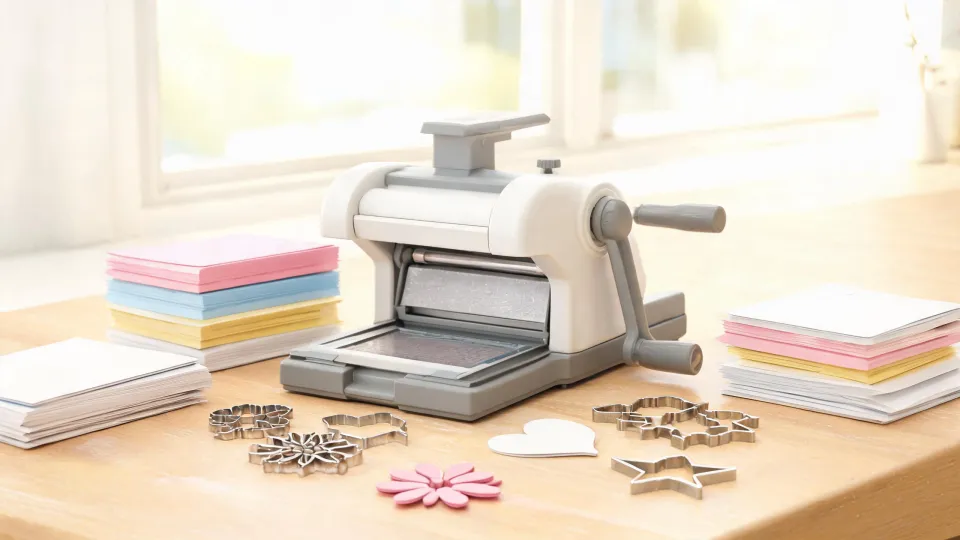
In my role coordinating custom corporate gift production for a promotional products company, I'm the person who gets called when everything is due yesterday. Over the past five years, I've managed more than 200 rush orders—including same-week turnarounds for event planners and brand managers whose original suppliers backed out. When I'm triaging a rush order, the question I hear most isn't "what's the fastest option that works?" It's "what's the cheapest thing that might work?"
That question drives me up a wall. Here's my honest position: the cheapest die cutting machine or corporate gift solution is rarely the cheapest option once you add your deadline to the total. A $399 machine that works on day one is cheaper than a $180 machine that fails on day two. I know "you get what you pay for" sounds like filler. But in this industry, the gap between the price tag and the real cost is enormous.
Why a $180 machine cost me $1,532
In my first year, I made the classic rookie mistake. We needed to produce 300 custom candle holders for a hotel chain's annual VIP welcome program—a die-cut memory foil wrap with their monogram on every piece. Instead of the Sizzix Big Shot Pro die cutting machine I'd researched, I bought a budget machine. Price difference: $180 vs. $399. I told myself we'd recoup the savings by the end of the first project.
We didn't recoup anything.
The budget machine jammed on the second pass of the memory foil. Not a simple jam—the kind where you need pliers, twenty minutes, and several bad words. And it kept happening. By hour three, we had 34 usable pieces and a pile of destroyed material that alone covered the cost difference between the two machines.
I boxed up the budget machine, ordered the Sizzix Big Shot Pro with express shipping, and we re-ran the job overnight. Here's the actual math from that week:
- Budget die cutting machine: $180
- Replacement cutting plates: $55
- Destroyed memory foil and cardstock: $230
- Two people, three hours of lost production: $180
- Rush shipping on the Sizzix: $68
- Four hours of overtime to re-run the order: $420
- The Sizzix Big Shot Pro itself: $399
Total: $1,532. The "savings" had vanished—and that left out the parts that aren't on a cost sheet. The schedule hit, the stress on our small team, and the fear that we'd miss the client's deadline. Even after ordering the Sizzix, I kept second-guessing. What if it didn't arrive on time? I didn't relax until the first clean cut came through the machine.
The client never found out. We absorbed the entire mess because losing that account wasn't an option. But I've watched the same shape of disaster repeat in other shops: someone saves $200 on equipment, burns $800 in materials and labor, and ends up buying the right machine anyway. That's not a strategy—it's a very expensive learning curve.
What a real cost comparison looks like
Here's the thing that gets missed in simple price comparisons: time certainty has a dollar value, and it's usually equal to the cost of missing a deadline.
Say the corporate gift you're producing is 1,000 pieces—a greeting card with a die-cut pattern, or a candle holder wrapped in a thin metal band stamped with a company logo. Your setup includes a Sizzix machine and a custom sizzix die configured for that exact project. Run rate: 60 units per hour. Error rate: roughly 0.3%. The thing is, that performance didn't happen by accident. It happened because the custom die is precise and the machine applies consistent pressure, pass after pass.
A basic die cutter might quote you a lower per-unit figure. But basic equipment slows down when you push it. Error rates climb, material wastes, redo piles grow. Before you know it, the delivery day slides. The cheapest option just became the most expensive one.
The same logic applies to the "where should I buy this stuff" question. If you're wondering where to buy scrapbooking supplies online, you can find plenty of sellers with good prices. But the better question is which seller will help you when the project is going sideways. The online store with the cheapest shopping cart total doesn't necessarily have the production expertise you need.
I also want to be clear about limitations: no die cutting machine cuts everything. Sizzix machines handle paper, cardstock, memory foil, leather, cork, thin craft metal, and similar materials—but they're not the right tool for thick acrylic or dense wood. That's fine. The goal isn't a machine that cuts all materials. It's a machine that cuts your materials, every time, without drama.
The counterintuitive part: it's not the machine, it's the die
Here's the angle I don't hear enough people talk about: the biggest bottleneck in producing corporate gifts is usually the die, not the machine. A die's precision determines whether you get 300 identical, clean-edged components or a pile of near-misses.
That's why the Sizzix Provo Craft custom die program became central to our workflow. We send in a vector file of the client's logo, a monogram, or a candle holder pattern, and within about five to seven days we have a durable steel-rule die. After that, producing hundreds of identical pieces is a single afternoon's work. That lead time works fine for most corporate projects—and it's worth planning around. I wouldn't trust anyone who promises same-day custom die production; that's not how it works. But it is true that custom dies expand what you can offer a client beyond generic shapes.
The Tim Holtz collaboration adds another layer—not just mechanical capability, but design credibility. Holtz's influence in the papercraft and crafting community is substantial, and that creative partnership tells clients that the tools behind our samples have artistic weight, not just engineering tolerance.
What if you only do a few projects a year?
To be fair, I can see the objection coming: "I only make corporate gifts a couple of times a year. Do I need professional-level equipment?"
My honest answer is: maybe not. My experience is based on mid-volume production—100 to 1,000 units per order, with clients who treat on-time delivery as a non-negotiable. If you're producing twenty holiday ornaments for local businesses, a Sizzix Sidekick and a handful of standard dies might genuinely be enough.
But I push back on the underlying logic: "I don't use it often, so cheap is safer." Cheap equipment tends to fail at the worst possible moment—because that's when you're pushing it hardest. The risk you're taking on isn't the machine's price; it's the cost of the failure scenario. That risk is the same whether you make 50 gifts or 5,000.
The math that changed my mind
At publicly listed prices as of early 2025, the Sizzix Big Shot Pro runs around $399. The smaller Big Shot Express and Sidekick are less. Custom dies cost more than standard dies, but they pay for themselves when a project needs consistency at scale.
Is $399 a lot for a machine? Compared to a $99 budget cutter, yes. Compared to the $50,000 account we could have lost in my first year? It's a rounding error. That's the only way I can frame this: price the failure, not just the machine.
I'm not saying every budget option is wrong. I am saying that in my experience—which is real, and from one shop with its own limits—the lowest price tag has cost us far more than the "premium" machines and custom dies ever did. The $180 machine taught me a lesson that no department budget can learn cheaply.
Look: I'm not selling Sizzix anything. I'm telling you the calculation that guides our shop: total cost of ownership, including time, material, rework, and credibility. If that math leads you somewhere else, fine. Just make sure your math includes the things that don't show up on an invoice.

Elise Laurent is a crystal and decorative glass quality analyst covering crystal figurines, vases, ornaments, suncatchers, and gift glassware. She examines ISO 6486-1 where food-contact glass dinnerware applies, then uses polarized strain inspection, dimensional checks, surface-defect grading, and refractive clarity to compare decorative pieces outside that scope. Her work helps sourcing teams choose materials, finishing routes, and protective packaging without confusing visual brilliance with verified durability.