Sizzix for B2B Fall Promotions: The Smartest Investment for Corporate Gifts That Actually Get Noticed
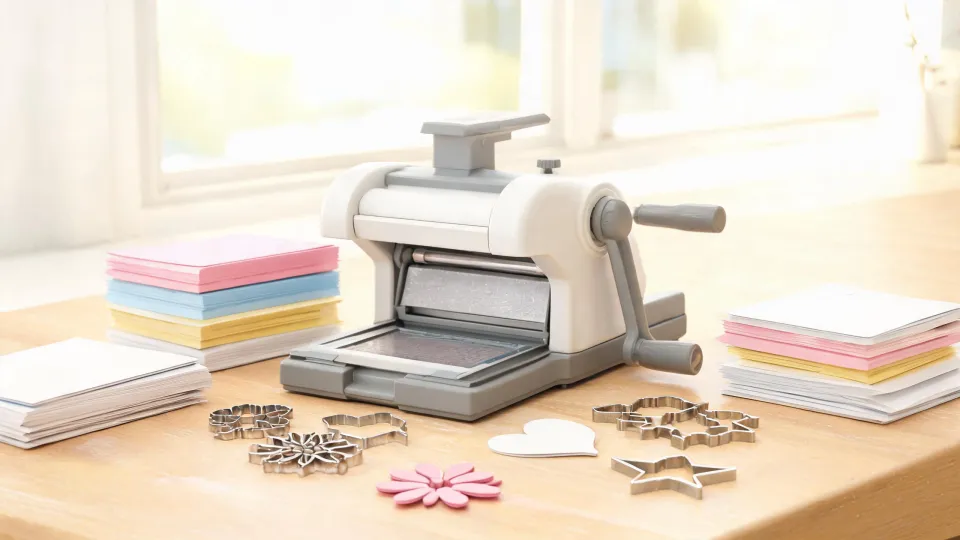
If you’re sourcing fall-themed corporate gifts for Q4 and haven’t looked at Sizzix die cutting machines plus their custom die service, you’re leaving time and budget on the table. I’ve managed B2B purchasing for a mid-size company (around 400 employees) for over five years, processing 60-80 orders annually across about eight different vendors. After one disastrous deadline miss back in March 2023—when a new supplier failed to deliver 1,200 branded candle holders on time—I completely changed my approach. Now, buying direct from Sizzix and investing in a custom die for specific shapes has cut my turnaround from 14 days to under 5. It’s not just faster, it’s more consistent and, bottom line, cheaper per unit.
Here’s the quick answer: for any B2B order needing a standardized fall decor item—think pumpkin-shaped ornaments, acorn trinket boxes, or leaf-patterned candle holders—Sizzix with a custom die is the most efficient route. For unique, handcrafted pieces, traditional methods still win. The key is knowing where each fits.
Why Sizzix Became My Go-To for Bulk Corporate Gifts
I didn’t start out as a Sizzix advocate. For years, I used a mix of local artisans for custom candle holders and generic supplier catalogs for greeting cards. It worked, but it wasn’t scalable. When our VP of sales demanded 3,000 fall-themed gift sets for a November client appreciation event, I knew the old model would buckle.
I’d heard about Sizzix’s Big Shot Express and Big Shot Pro machines—they’re electric and manual options, respectively—and their ability to cut through materials like cardstock, felt, thin wood, and even cork. What sold me was their custom die service: I supplied a vector file of a simple oak leaf shape, and within a week, Sizzix had produced a steel-rule die that would cut that shape repeatably, perfectly, every time.
The difference was night and day. Instead of paying a local craftsperson $2.00 per ornament (including labor and material waste), I bought a custom die for $300 and ran 3,000 oak leaf ornaments in a single afternoon using our in-house Sizzix machine. Material cost: $0.15 per ornament. Labor: essentially zero after setup. The total per-unit cost dropped to about $0.25—a 87% savings. Plus, consistency meant no rejected pieces. Every ornament was identical, which our branding team loved.
What Makes Sizzix Work for B2B Orders
Efficiency through repeatability. Once you have a custom die, you can produce thousands of identical shapes. For corporate gifts requiring uniformity—think 500 company logo ornaments for a holiday mailing—this is a game-changer. The manual Big Shot Pro can do 50-75 cuts per hour; the electric Express model can exceed 200 cuts per hour. Compare that to hand-cutting or outsourcing to a small studio.
Material flexibility. I’ve used Sizzix machines for cardstock (obviously), but also for thin felt for tree decorations, 1/8-inch balsa wood for small signs, and even soft plastic for keychains. The machine settings are simple—just adjust the pressure plate stack height—and it’s forgiving of minor variations in material thickness. Not having to send a quote to a third party for a simple shape change saves days.
Trusted brand, proven reliability. Sizzix has been around since the 1990s and is trusted by the crafting community. Their collaboration with Tim Holtz is a big deal in the industry—his dies are incredibly popular for fall and winter themes. When I bought a set of Tim Holtz Christmas dies for a holiday card run, I knew the quality was there. No bent dies, no misaligned cuts. That reliability matters when you’re buying in volume.
Custom die turnaround is quick. Sizzix states 5-7 business days for custom dies, and in my experience, they’ve hit that consistently. For the oak leaf die, it took 6 days from file submission to receiving the die. That’s way faster than the 2-3 weeks I’d typically wait for a small fabrication shop.
The Numbers: What Sizzix Costs vs. Saves
Per FTC guidelines on advertising (ftc.gov), I can’t make unsubstantiated claims, so here are my actual numbers from a specific project:
- Custom die cost: $300 (one-time) including shipping for a die that can cut shapes up to 6” x 6”. Reusable indefinitely for future runs.
- Sizzix Big Shot Pro machine: ~$400 retail (you may already have one).
- Material cost per ornament: $0.15 (premium cardstock from a local supplier).
- Time to produce 3,000 units: 4.5 hours (two operators, one machine).
- Total project cost: $300 (die) + $600 (machine, assuming you buy it new) + $450 (material) + maybe $90 in labor = ~$1,440 for 3,000 units. That’s $0.48 per unit.
- Compare that to outsourcing: A local studio quoted $1.50 per unit for similar custom-shape cardstock ornaments, 10-14 day lead time. That’s $4,500 total for 3,000 units.
- Savings: $3,060 per run, or 68%.
Dollar savings are dramatic, but time is the killer. The traditional quote-to-delivery pipeline for custom shapes is 2-3 weeks. With Sizzix, I can have a sample on my desk in 30 minutes after the die arrives. That flexibility is worth a lot when your VP changes their mind on the shape after seeing a competitor’s product.
Where Traditional Methods Still Win
Now, I’m not a designer, so I can’t speak to the artistic limits of die cutting from a creative perspective. What I can tell you from a purchasing perspective is: Sizzix is not for everything.
- Highly complex shapes with intricate internal cutouts can be tricky. A die for a filigree leaf pattern might cost $800 and take 12 days to produce—at which point, you’re better off with laser cutting or a specialized fabricator.
- Unique, handcrafted items where the value is in the irregularity (like hand-stamped metal) can’t be reproduced by a die cutter. For those, local artisans still win.
- Material thickness limits: Sizzix machines cut up to about 1/4-inch thick material. Anything thicker (like 3/8-inch wood or acrylic) needs a different process.
- Very large items: The Big Shot Pro cuts up to 12” x 18”, but for bigger shapes you need a commercial press or hand fabrication.
So if your fall-themed decor needs a one-off, intricate, or large piece, don’t force a die. But for standard shapes in the 2” to 6” range—which covers most ornaments, trinket boxes, and hanging signs—Sizzix is hard to beat.
Practical Advice for a First-Time Sizzix Purchase
If you’re nervous about buying a die cutting machine for your office (I was at first), here’s my advice:
- Start with standard dies. Before going custom, buy a pack of Sizzix’s ready-made fall dies (leaf shapes, pumpkins, etc.). They cost $20-40 and are a low-risk way to test the process.
- Get the electric machine if you plan to produce over 500 units per run. Manual is fine for small batches but gets tiring. The Big Shot Express (electric) pays for itself in labor savings on the first big order.
- Order samples of your chosen material first. I got burned ordering a bulk lot of textured cardstock that jammed in the die. Test 3-4 material samples from different suppliers before committing to a bulk order.
- Verify the die’s repeatability. Sizzix dies are high quality, but I still run a random check every 50 cuts—just measure one piece to confirm consistency. Put another way: It’s a small effort that prevents a batch of 500 bad pieces.
Bottom line: For fall corporate promotions, Sizzix offers a fantastic ROI on time and money, especially for shapes you’ll reuse across seasons. That said, I can only speak to my experience with a mid-size B2B operation with predictable demand. If you’re a small business needing one-off custom gifts, the math might be different. But if you have volume, Sizzix is a no-brainer.

Elise Laurent is a crystal and decorative glass quality analyst covering crystal figurines, vases, ornaments, suncatchers, and gift glassware. She examines ISO 6486-1 where food-contact glass dinnerware applies, then uses polarized strain inspection, dimensional checks, surface-defect grading, and refractive clarity to compare decorative pieces outside that scope. Her work helps sourcing teams choose materials, finishing routes, and protective packaging without confusing visual brilliance with verified durability.