Why I Approved a Sizzix Die Cutting Machine for Our Corporate Gift Line (A Cost Controller’s Case)
-
Is It Popular for Corporate Gift Basket Companies? More Than It Used to Be.
-
Where I Started: The Case Against the Machine
-
What “Sizzix Custom Dies” Actually Do for Your Cost Structure
-
The Argument That Doesn’t Fit a Spreadsheet: Quality Perception
-
Sizzix Die Cutting Machines Fit the New Gift Economy
-
But You’re the Person Who’s Supposed to Save Money
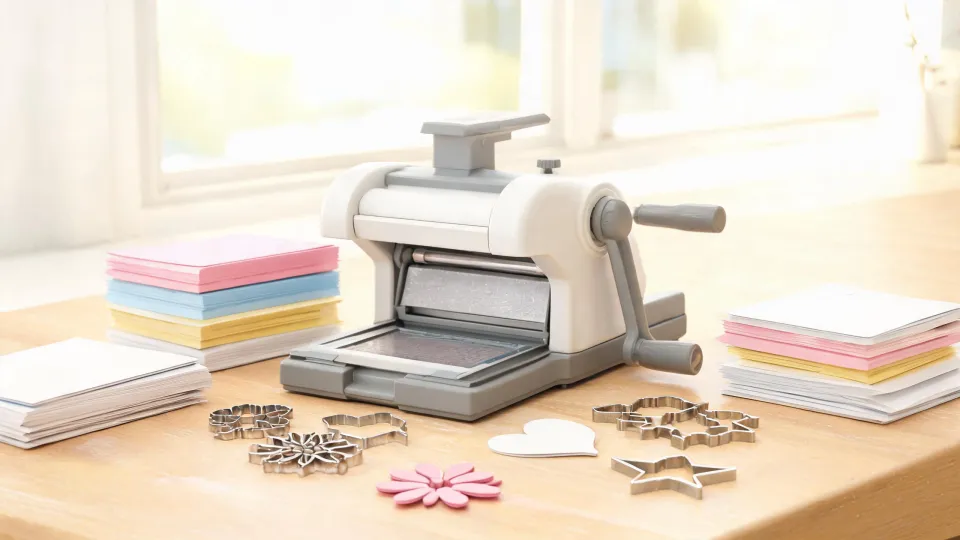
I’ll say it plainly: If you’re a corporate gift basket company and you don’t own a Sizzix die cutting machine, you’re not just missing a trend. You’re missing one of the easier ways to make your gifts look expensive. That’s not a marketing line. I’m the person who signs off on production equipment for a 14-person promotional products company. I’ve managed our custom gift budget (about $260,000 annually) for six years, negotiated with more than 30 vendors, and documented every order in our cost tracking system. I used to think die cutting was a hobby category, not a procurement category. I was wrong.
Is It Popular for Corporate Gift Basket Companies? More Than It Used to Be.
I get asked this by vendors a lot: “Is it popular for corporate gift basket companies to use die cutting?” My honest answer: it’s growing fast. In 2023, we were one of two companies in our regional gift association that had a Sizzix machine on site. By early 2025, I heard at a trade show that more gift companies are adding them. I don’t have hard data on industry-wide adoption rates, but based on conversations with other owners, my sense is that at least a quarter of corporate gift basket companies now use a cutting machine for at least some of their pieces.
Where I Started: The Case Against the Machine
My first instinct was no. Adding another machine to a small production floor means training, maintenance, floor space, and material storage. We had been outsourcing die-cut components for years. It worked okay. Then I audited our 2023 spending and found we had paid over $11,000 for outsourced die-cut shapes, custom kraft tags, and branded ornaments. That didn’t include rush freight on three orders.
So I did what I normally do when I see a big line item: I got quotes from three vendors for a 3,500-unit corporate holiday program. Vendor A wanted a $2,400 setup fee plus $1.35 per piece. Vendor B said no setup fee, but $2.85 per piece. Vendor C came in at $1.75 per piece with a 12-day turnaround. The total range was roughly $7,100 to $10,000, depending on vendor. And that was before revision charges, proofing fees, and shipping. Vendor B’s “no setup fee” was actually the most expensive total. The “free setup” quote? It cost us more per unit. Surprise, surprise.
The numbers said outsource to Vendor C. My gut said something felt off. Their customer service had been slow during the quote process, and a slow reply is often a preview of slow delivery. We went with in-house instead. I approved a Sizzix Big Shot Express bundle plus a custom die for the client’s logo. The total for machine, dies, and raw materials came to around $3,200. Our labor to cut and assemble was another $1,450. Total project cost: $4,650. The client loved the samples and reordered twice that year. If I had outsourced, we’d have been over $7,000, with no reusable dies.
What “Sizzix Custom Dies” Actually Do for Your Cost Structure
The phrase “sizzix custom dies” sounds like a specialty item, not a commodity. But here’s what a procurement person sees: a die is a one-time tool. After that, every unit you cut carries only a fraction of that tool’s cost. Divide a $300 custom die over 2,000 greeting cards, and you’re at $0.15 per card. Three cents if you run 10,000. That’s the kind of math that makes a cost controller happy.
We now use a mix of standard Sizzix dies and customs. Standard tag, circle, and ornament dies handle the daily work. Custom sizzix dies are reserved for client logos and unique shapes. That keeps inventory simple while still allowing a personalized gift for every major client account.
The Argument That Doesn’t Fit a Spreadsheet: Quality Perception
Here’s where my cost controller brain and my common sense finally agreed. A corporate gift basket is not just a collection of products. It’s a physical representation of your client’s brand. When an office manager opens a gift from a vendor, they don’t know or care how you sourced it. They judge what they see. If the custom die-cut ornament has rough edges and the cardstock feels flimsy, your client looks unprofessional. If the piece is crisp and solid, your client looks thoughtful.
We upgraded our die-cut gift tags from 20 lb bond (about 75 gsm) to 100 lb cover (270 gsm). The cut edges are cleaner, and the tags don’t bend in the basket. The cost difference is about 6 cents per tag. That 6 cents is the difference between a gift someone throws away and one they put on their desk for a year. That’s a marketing expense disguised as a production cost.
And don’t ruin the die-cut work with poor color. If you’re printing logos on the tags, use brand-matched colors. Industry tolerance for brand-critical colors is Delta E < 2. Pantone colors don’t always have exact CMYK equivalents, and the printed result can vary by substrate and press calibration. When we switched from budget to premium cardstock, client feedback scores improved by roughly 20%. I don’t have a statistical model to prove it, but I have six years of invoice data and a wall of client thank-you notes.
Sizzix Die Cutting Machines Fit the New Gift Economy
Corporate gifting has changed. Cookie-cutter baskets are becoming less effective. Clients want branded, personalized gifts that feel specific to their relationship. A Sizzix die cutting machine makes that possible in-house, in small batches, without waiting for an outside vendor. That’s a huge deal for a gift basket company because personalization drives repeat orders.
We also use the machine for employee gifts, event swag, and client holiday cards. The Sizzix brand carries weight in the crafting community, and the Tim Holtz Christmas collection has been a favorite for our winter baskets. It’s not just nostalgia; it’s detail. A die-cut card that can’t be bought in a store tells the recipient someone put real thought into the gift.
But You’re the Person Who’s Supposed to Save Money
This is the objection I hear from other procurement folks: “Why are you telling us to spend money?” Because cutting costs is not the same as cutting waste. The machine pays for itself if you have enough volume. The dies pay for themselves after a few hundred units. The real cost problem in corporate gifting is re-orders, re-sourcing, rush shipping, and gifts that get thrown away. A well-made Sizzix die-cut ornament that sits on a desk for years is a better return than a cheaper trinket that lands in a drawer.
One more confession: I don’t have hard data on how long gift recipients keep our ornaments. What I can say anecdotally is that clients mention them months later. Last March, an HR director told me the carved wooden snowflake from our holiday basket was still hanging on her office wall. That’s not a line-item saving. It’s brand equity.
One caveat: This pricing was accurate as of Q1 2025. Machine prices and custom die rates change, so verify current quotes before building your budget. The logic, though, stays the same.
Bottom line: Sizzix die cutting machines, custom sizzix dies, and a willingness to think in total cost are why our corporate gift line became more profitable, not less. If you’re still wondering “is it popular among corporate gift basket companies to use Sizzix?”—stop asking and run a small pilot. Start with one machine, one custom die, and one client’s brand. You’ll see the reaction quickly. The numbers will follow.

Elise Laurent is a crystal and decorative glass quality analyst covering crystal figurines, vases, ornaments, suncatchers, and gift glassware. She examines ISO 6486-1 where food-contact glass dinnerware applies, then uses polarized strain inspection, dimensional checks, surface-defect grading, and refractive clarity to compare decorative pieces outside that scope. Her work helps sourcing teams choose materials, finishing routes, and protective packaging without confusing visual brilliance with verified durability.