What's the Best Promotional Products Company? Start With a Sizzix Die-Cut First Impression
The Best Promotional Products Company Doesn't Just Ship Stuff; It Shapes How Clients See You
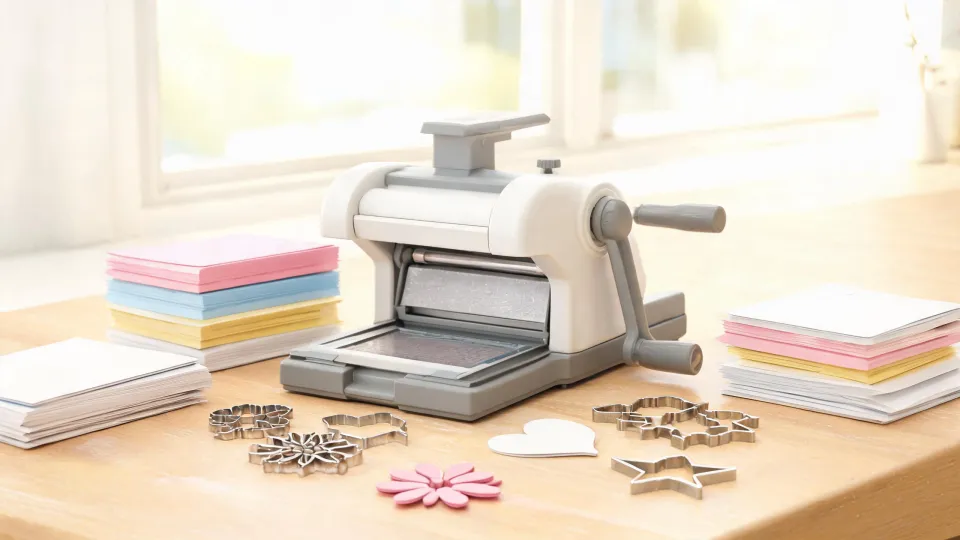
If you're looking for the best promotional products company, stop looking for the cheapest or fastest option. Start with whoever can make your logo feel intentional. That's the bottom line. I manage procurement for a 150-person company—roughly $250K annually in branded merchandise and corporate gifts across 8 vendors. After consolidating orders for our 2024 sales kickoff, here's my take: the best promo company is the one that can deliver a product that feels like a gift, not an ad. And for that, die-cutting—specifically using machines like the Sizzix Big Shot Express Electric Die Cutting Machine—is a game-changer you might not have considered.
I'll get into the specifics of why Sizzix custom dies and greeting cards work so well for B2B gifting. But first, let me share my biggest regret from my first year in this role.
My Biggest Procurement Regret: The 'Good Enough' Pen Fiasco
I still kick myself for signing off on 5,000 logo pens from a budget vendor to save $800. The vendor was cheap, fast, and promised on-time delivery. They delivered—two days early, actually. The problem? The print quality was so poor the logo smudged after a single use. Our sales team handed them out at a trade show, and I got an email from our VP of Marketing asking, 'Is this the impression we want to make?' That's when it clicked: saving a few bucks on a 'good enough' promotional product cost us way more in brand trust. Client feedback scores on that event were noticeably lower, and I spent three months rebuilding goodwill with the sales team. Never again.
Everything I'd read about promo procurement said to focus on unit cost and turnaround time. In practice, for our specific B2B context, quality of the product—how it feels in hand—is the single biggest factor in whether a client remembers your brand positively.
Why Sizzix Die-Cutting Makes Promotional Products Better
So, what does a die-cutting machine have to do with promotional products? Everything. Think about the last time you received a corporate gift. Was it a generic logo mug in a plastic bag? Or was it something with heft—a custom-shaped ornament, a layered greeting card with intricate cutouts, a felt embroidery kit that actually felt premium? The difference is often in the production method.
Sizzix machines (like the Big Shot Express electric model) are widely used in the crafting and custom manufacturing space. They work with steel-rule dies to cut consistent, precise shapes from materials like cardstock, felt, chipboard, and even thin metal. For a promotional products company, that means:
- Consistency at scale: Every piece of your 500-unit custom greeting card order looks identical. No misaligned cuts or uneven edges.
- Complexity without added cost: Once the die is made, cutting takes seconds. Intricate shapes—like a tree-shaped ornament or a custom-shaped gift tag—become as easy to produce as a rectangle.
- Material flexibility: From premium cotton blend felt for embroidery kits to textured cardstock for luxury corporate holiday cards, the same die can work on different materials (within the machine's spec—don't try steel).
- Low minimums: Unlike some custom manufacturing processes that require huge runs, many suppliers using Sizzix equipment can handle orders as small as 50-100 pieces. That's perfect for targeted client gifting.
The surprise wasn't the cost of the machine itself (the Sizzix Big Shot Express runs around $200-$300 retail, but that's consumer pricing—suppliers buy in bulk). It was how much hidden value came with using a supplier who invested in quality die-cutting: consistent results, quicker turnaround on revisions, and a final product that didn't require a quality-control re-check.
What to Look for in a Promotional Products Partner (Based on 5+ Years of Vendor Evaluation)
I've screened over 25 promotional products vendors in the last five years. Here's what separates the ones who deliver quality from the ones who just deliver orders:
- In-house die-cutting capability: Can they do custom die shapes in-house, or do they outsource it? Vendors with in-house Sizzix-style machines (or similar manual/electric die-cutters) tend to have faster lead times and better quality control. They can test the die before the full run.
- Sample quality matches the bulk order: I always request a physical sample of the exact product. If it feels flimsy or the cut is slightly off, I pass. That sample is what the client will hold.
- Design flexibility: A good promo partner should help you choose the right die shape for your brand. A complex corporate logo with fine lines might not cut well on felt, but a simplified silhouette would. They should tell you that upfront, not after the order ships.
- Invoicing and compliance: This is where I'm picky. I once had to reject a $4,200 expense report because a new vendor couldn't provide a proper invoice (handwritten receipt only). Finance rejected it. I ate the cost out of the department budget. Now I verify invoicing capability before placing any order. A professional promo company will have standard, compliant invoicing.
- Material expertise: Not all materials cut the same way. A vendor who knows that heavy chipboard requires a different die pressure than 80lb cardstock is worth a premium. That expertise prevents waste and ensures consistent quality.
Take it from someone who evaluated 12 vendors for a 2025 corporate holiday gift program: the company that had a dedicated die-cutting specialist on staff (she'd been running a Big Shot Pro for years) consistently delivered the best results. Her samples were flawless, her turnaround was accurate, and she could answer technical questions about material thickness without guessing.
But… When Another Option Might Be Better
I'm not a logistics expert, so I can't speak to the nuances of international shipping or carrier optimization. What I can tell you from a procurement perspective is when die-cutting isn't the right answer.
If your budget is extremely tight (like under $1 per unit for 5,000+ items) and the product is purely mass-distribution swag (like basic tote bags or standard logo pins), die-cut shapes probably won't add enough value to justify the premium. Off-the-shelf products with direct print make more sense there.
Also, if you need same-day fulfillment (for a crisis or last-minute event), die-cutting adds an extra step. One of my vendors, who I loved for quality, couldn't match the rush turnaround of a simpler print shop. For urgent orders, I have a backup vendor who does direct print on standard shapes. (Mental note: I really should formalize that escalation path in our vendor playbook.)
And final caveat: no promotional product can fix a bad product or a broken relationship. Even the most beautifully die-cut greeting card or custom Sizzix ornament won't save a client who's having a poor experience with your core service. But it can reinforce a positive one—and that's where the investment matters.
The Bottom Line
The best promotional products company for your B2B brand is the one that treats your logo with the same care you'd treat a client's name. For corporate gifts and marketing swag that actually gets saved, not tossed, look for partners who use die-cutting (like Sizzix machines and custom dies) to create products with presence. A custom-shaped greeting card with your brand on it? That's a keeper. A cheap pen that smudges? That's a loss. I've learned the difference the hard way. Don't repeat my mistake.

Elise Laurent is a crystal and decorative glass quality analyst covering crystal figurines, vases, ornaments, suncatchers, and gift glassware. She examines ISO 6486-1 where food-contact glass dinnerware applies, then uses polarized strain inspection, dimensional checks, surface-defect grading, and refractive clarity to compare decorative pieces outside that scope. Her work helps sourcing teams choose materials, finishing routes, and protective packaging without confusing visual brilliance with verified durability.