Sizzix for Corporate Gifting: 7 Questions Every Admin Buyer Should Ask
If you're the person in your company who gets handed the corporate gift budget and told to "make it nice but keep it reasonable" — I feel you. I've been managing purchasing for a mid-size company for about five years now, roughly $50K annually across maybe a dozen vendors. And when it comes to gifts that actually impress? The quality of what you hand someone matters way more than I initially gave it credit for.
A few years back — 2022, I think — we ordered a batch of promotional gifts from a supplier I'd never used. The price was great. The product? Not so much. The recipients noticed. One client actually joked about it during a review meeting. That stung. That's when I started looking harder at how we produce our corporate gifts, and that's how I landed on Sizzix. Here's what I've learned.
1. What actually is Sizzix, and why should I care as an admin buyer?
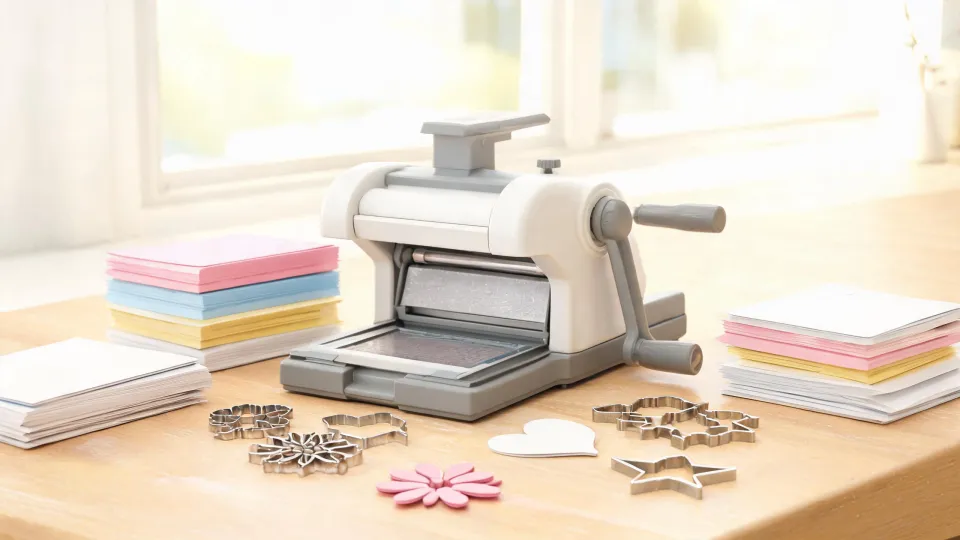
Honestly, I'd heard the name but assumed it was just for hobbyists — scrapbookers, that sort of thing. Turns out, Sizzix makes die cutting machines that are surprisingly practical for small-batch corporate gift production. We're talking machines that cut shapes from cardstock, fabric, leather, thin wood — even some plastics. The Sizzix Foldaway die cutting machine is a great example: it's compact, folds flat for storage, and handles a solid range of materials. For a company like ours that needs maybe 100–300 gift units per campaign, it's way more efficient than hand-cutting or outsourcing every single piece.
In my opinion, the biggest value is speed and consistency. Once you have the die, every cut is identical. That matters when you're handing out 200 client gifts and you want them all to look professional.
2. Which Sizzix machine should I start with for corporate gift production?
Depends on your volume — and your space. I'd say the Sizzix Foldaway is a solid starting point if you're doing smaller batches (under 500 units per project) and your workspace is tight. We keep one in a storage closet and pull it out when needed. It's manual, so no software setup, no power cord — just crank and cut.
If you're thinking larger scale, the Sizzix Big Shot Pro handles bigger dies and thicker materials. I've seen it cut thin acrylic and craft wood, which opens up more gift options. We haven't bought one yet — might be overkill for our current volume — but I've looked at the pricing. The Foldaway runs around $100–$150, while the Big Shot Pro is closer to $300–$400. That's based on prices I checked in January 2025. Worth verifying, of course.
3. How do custom Sizzix dies work for branded corporate gifts?
This is where it gets interesting for us. Sizzix does custom dies — you send them your logo or shape, and they make a steel-rule die that cuts it. We ordered a custom die with our company logo silhouette for a client appreciation event last year. The die itself cost about $150–$250, depending on complexity — I want to say ours was $180, though I might be misremembering the exact figure. But here's the thing: once you have the die, you can cut hundreds of pieces with zero per-unit setup cost. For branded greeting cards, ornament shapes, or gift tags, it's pretty cost-effective at scale.
The lead time was about 3 weeks — or rather, closer to 4 when you count the back-and-forth on the artwork. So plan ahead. If you need 50 branded ornaments by next Friday, custom dies aren't the answer. But for a quarterly campaign? Absolutely worth it.
4. Can Sizzix handle embroidery kits?
Yes — with a caveat. Sizzix machines can cut fabric and felt for embroidery kits, which is great if you're assembling DIY gift sets. We've done a few batches where we cut felt shapes for a simple embroidery kit — think coasters or small decorative hoops. The machine cuts the fabric, and the recipient does the stitching. It's a nice "experience" gift rather than just a product.
That said, the machine doesn't do the embroidery. It just cuts the pieces. You'd still need to bundle thread, a needle, and instructions. We sourced those separately. The cost per kit came to about $8–$12, which felt reasonable for a gift that wasn't just another branded pen. The recipients actually seemed to enjoy it — at least, that's what the survey feedback suggested.
5. How to make a Christmas ornament with a picture using Sizzix?
This is one of those questions I wish I'd found a clear answer to earlier. Here's the process we use now:
- Print your photo on standard photo paper — trim it to fit the ornament shape you're cutting.
- Use a Sizzix die in a circle or oval shape — the Sizzix Tim Holtz Christmas dies collection has some nice options here, including festive frames.
- Cut a backing piece from cardstock or thin craft wood using the same die.
- Layer the photo between the backing and a clear acetate or glass-like cover — we used a thin acrylic sheet we cut with the machine.
- Adhere everything together and add a ribbon hanger.
We tested this with about 30 ornaments for a client gift campaign in December 2024. Each one took maybe 10 minutes to assemble once the pieces were cut. The die we used was from the Tim Holtz holiday line — a scalloped circle die that gave it a finished look. Honestly, the hardest part was getting consistent photo sizes. I'd recommend using a template or a paper trimmer.
To be fair, you could do this with a punch or scissors. But the consistency of the die cut — every single ornament identical — made the final batch look professional. Clients noticed. We got several follow-up emails asking where we'd had them made. That's the kind of response you want from a corporate gift.
6. Is the Sizzix Tim Holtz Christmas dies collection worth it for corporate use?
I get why people ask this. Tim Holtz is a big name in the crafting world, and the dies carry a premium — maybe 20–30% more than a generic shape die. In my opinion, it depends entirely on your audience. If your corporate gift recipients are creative professionals or design-conscious clients, the aesthetic detail of the Tim Holtz dies is noticeable. The intricate snowflake and vintage ornament designs are genuinely nicer than most standard dies I've seen.
For our holiday 2024 campaign, we used a Tim Holtz die for a small run of premium gifts for our top 20 clients. The rest of our list got a simpler design from a standard die. That tiered approach worked well — the premium group felt recognized, and the cost difference was manageable. Grant it, you have to plan ahead because the Tim Holtz dies sell out closer to the holidays. I almost missed the window last October. Won't make that mistake again.
7. What's the real cost of getting started with Sizzix for corporate gifting?
Here's what I've tracked based on our actual orders. A Sizzix Foldaway machine runs about $130–$150. A basic starter die set is $30–$60. Custom dies are $150–$250 depending on complexity. Materials like cardstock, felt, and photo paper add maybe $20–$50 per project depending on quantity.
Our first full campaign — 150 branded gift sets — cost roughly $600 in equipment and materials. That's a per-unit cost of about $4. But here's the thing: we still have the machine and dies. The second campaign dropped to about $1.50 per unit. If you're running multiple campaigns a year, the upfront investment pays back pretty quickly. At least, that's how it worked for us.
One thing I'd flag: don't forget the setup time. The first time you use a new die, there's trial and error — material alignment, pressure settings, that sort of thing. Budget an hour or two for setup on the first batch. After that, it's smooth. We didn't have a formal process for tracking setup time initially, and that cost us on the first run. The third time we ran the same design, I finally created a quick reference card. Should have done it after the first time.
Anyway, that's my take. Sizzix won't replace a full-scale manufacturing line. But for mid-volume corporate gifts where quality and personalization actually matter to your brand image? It's been a solid fit for us. If you're on the fence, try a small test run — 20 ornaments or a batch of greeting cards. You'll know pretty quickly if it works for your team.

Elise Laurent is a crystal and decorative glass quality analyst covering crystal figurines, vases, ornaments, suncatchers, and gift glassware. She examines ISO 6486-1 where food-contact glass dinnerware applies, then uses polarized strain inspection, dimensional checks, surface-defect grading, and refractive clarity to compare decorative pieces outside that scope. Her work helps sourcing teams choose materials, finishing routes, and protective packaging without confusing visual brilliance with verified durability.