Sizzix FAQ: Big Shot Machines, Custom Dies, and Corporate Gift Ideas – Lessons from My Mistakes
-
Everything you wanted to know about Sizzix (but were afraid to ask)
-
1. What's the difference between the Sizzix Big Shot manual and electric machines?
-
2. Can I use custom Sizzix dies for small-batch corporate gifts?
-
3. How do I choose the right Sizzix dies for Christmas ornaments?
-
4. What's the simplest way to make greeting cards with Sizzix?
-
5. What are the best corporate gift baskets I can create with Sizzix?
-
6. I'm a small business – is Sizzix affordable for low-volume orders?
-
7. What mistakes should I avoid when ordering custom Sizzix dies?
-
8. Can Sizzix machines cut materials other than paper?
-
1. What's the difference between the Sizzix Big Shot manual and electric machines?
Everything you wanted to know about Sizzix (but were afraid to ask)
I've been handling custom die orders for about 5 years now. I started with a $200 trial order of custom-cut tags for a local bakery, and somehow I'm still here – despite making roughly $3,000 worth of preventable mistakes along the way. I now maintain our team's pre-order checklist so no one else repeats my errors. Below are the questions I get most often, answered with the hard-won lessons from those screw-ups.
1. What's the difference between the Sizzix Big Shot manual and electric machines?
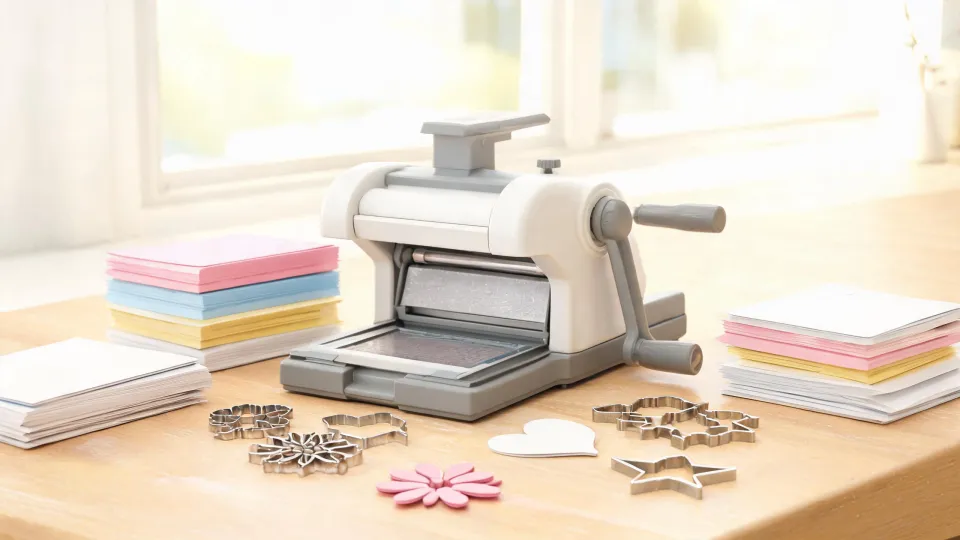
The short answer: the manual Big Shot (the classic crank model) works great for smaller batches – think 50–100 pieces at a time. The electric models (like the Big Shot Switch or Big Shot Pro) are faster and handle thicker materials more consistently. I personally started with the manual because I was unsure about volume. Six months in, I regretted not buying the electric after a 500-piece order of Christmas ornaments nearly broke my wrist. If you're doing anything over 200 pieces regularly, go electric. If you're testing the waters, the manual is a super reliable starting point – just know your wrist will remind you of that choice.
2. Can I use custom Sizzix dies for small-batch corporate gifts?
Absolutely. And I'll tell you a story. In early 2022, a small real estate agency asked for 30 custom greeting cards with their logo die-cut into the cover. My first thought was “too small, won't be worth the die cost.” But I took it. The custom die cost $120, and the 30 cards sold for $250 – not huge profit, but that client now orders 600 units per quarter. Small doesn't mean unimportant – it means potential. Today's $200 order can be tomorrow's $2,000 order. I don't have hard data on how many small clients grow, but based on my own experience, roughly half of the people who buy 50–100 units come back for more within a year.
3. How do I choose the right Sizzix dies for Christmas ornaments?
First off, know that custom dies for ornaments need to be designed specifically for the material you're cutting – cardstock, felt, or thin wood veneer all behave differently. I once ordered a set of dies for felt ornaments and assumed the same design would work for glitter cardstock. Spoiler: it didn't. The intricate stars ripped apart on the cardstock because the die was too tight. $340 in wasted material plus a 1-week delay. My rule now: test every new die design on scrap of your final material before committing to the full run. Also, the die's depth matters – deeper dies cut thicker materials. If you're doing layered ornaments, order dies with adjustable cutting pressure.
4. What's the simplest way to make greeting cards with Sizzix?
Honestly, the easiest path is to buy pre-scored card blanks and then use your Sizzix to cut a coordinating layer or a sentiment. For large quantities (over 100), I use a Big Shot Pro with a custom die that cuts the card front shape and a matching layer in one pass. That's the “pro” move. But for small runs, just use a manual machine with a simple rectangle die or a decorative edge die. The surprise isn't the machine – it's how much time you save by not hand-cutting every single piece. One tip I wish I'd known: always use a cutting pad on both sides of the material. It extends the life of your dies and prevents uneven cuts. I learned that after ruining a $85 custom die by running it without a bottom pad.
5. What are the best corporate gift baskets I can create with Sizzix?
That's a great question – and it's not what I expected when I started. The best corporate gift baskets are the ones that feel personal but still look professional. Using Sizzix, you can die-cut custom tags, box inserts, and even miniature crystal gift holders if you have the right dies. My go-to basket recipe: a small wooden or acrylic box with a custom die-cut insert that holds a scented candle, a mini greeting card, and a branded ornament. The die-cut insert itself becomes a keepsake. But here's the catch – the die cost for complex inserts can be $200+. That's only worthwhile if you're making at least 50-100 baskets. For smaller orders (say 10-20), you're better off using existing dies and building the insert manually. Bottom line: match the die investment to the order size. I had a $900 lesson from ordering an expensive custom die for just 15 baskets – the math doesn't work unless you reuse the die.
6. I'm a small business – is Sizzix affordable for low-volume orders?
Yes, but you need to be smart about it. The Sizzix Big Shot manual machine itself is under $100 – that's less than a dinner out for four. Standard dies start around $15-30. Custom dies are more, but they're a one-time investment that can be used across multiple orders. I've made more than one mistake buying cheap dies from unknown sellers (they break, they cut poorly). Stick with Sizzix original dies or trusted third-party brands that work with Sizzix machines. For small runs, the manual machine with standard dies is a no-brainer. If you're uncertain about which dies to start with, order a sample pack – most suppliers will send a few impressions for a small fee. That saved me from ordering a $85 custom die that I never used because the design didn't work for my cardstock.
7. What mistakes should I avoid when ordering custom Sizzix dies?
Let me count the ways. (I've made most of them.)
- Not accounting for bleed/clearance. Your design needs a solid border around the cutting line – otherwise the die will cut into your artwork. I lost a $450 order because the logo extended to the edge and the cut was misaligned.
- Ignoring material thickness. A die designed for 120gsm cardstock won't cut 300gsm board cleanly. Always specify the exact material when ordering a custom die.
- Not asking about lead time. Custom dies take 7-14 business days on average. Rush fees are real. I'm still not sure why the pricing varies so much between suppliers – my best guess is it depends on the complexity of the steel rule bending.
- Skipping the test cut. Always request a test sample before approving the die. It costs maybe $10-20 and can save you a $500 redo.
One more thing: keep your dies in a dry place. I once left a set in a damp garage and got rust spots that transferred onto the paper. $200 down the drain.
8. Can Sizzix machines cut materials other than paper?
Yes, but with limits. The manual machine can handle thin cork, felt, magnetic sheet, thin chipboard, and some fabrics. For thicker items (like thin wood veneer or acrylic), you need the electric Big Shot Pro or the Sidekick. I've successfully cut denim for a patch project – it worked but the machine struggled a bit. The official Sizzix guidelines say up to 1.5mm for most materials, but that's conservative. Just don't try metal or anything over 2mm unless you have the Pro. I don't have exact durability data, but anecdotally, I've seen the manual machine wear down after about 20,000 cuts – still impressive for the price. If you're cutting non-paper materials routinely, invest in the electric version. Trust me, the wrist pain isn't worth saving $50.

Elise Laurent is a crystal and decorative glass quality analyst covering crystal figurines, vases, ornaments, suncatchers, and gift glassware. She examines ISO 6486-1 where food-contact glass dinnerware applies, then uses polarized strain inspection, dimensional checks, surface-defect grading, and refractive clarity to compare decorative pieces outside that scope. Her work helps sourcing teams choose materials, finishing routes, and protective packaging without confusing visual brilliance with verified durability.