Sizzix Die Cutting Machines vs. Manual Cutting: What 7 Years of Custom Gift Orders Taught Me
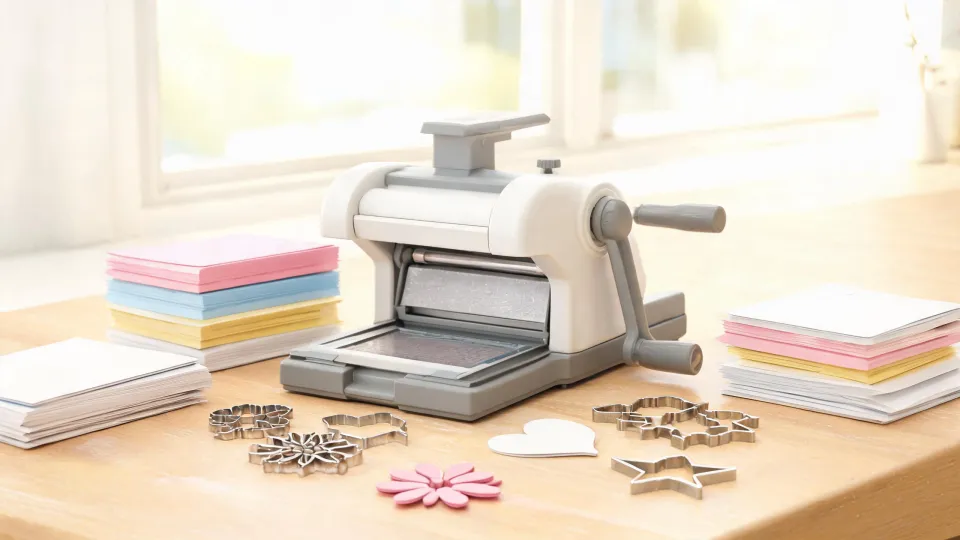
I run a small workshop that's been handling custom corporate gifting orders for 7 years. In that time, I've personally made—and documented—14 significant mistakes, totaling roughly $6,500 in wasted budget. Not a number I'm proud of, but it's the reason I now maintain our team's pre-production checklist. This article is basically that checklist, written as the comparison I wish someone had walked me through back in 2017: Sizzix die cutting machines vs. manual cutting.
When I searched for "die cutting machine sizzix" eight years ago, all I found were product pages and hobby tutorials. Nothing about production realities. Nothing about what breaks when you scale up to corporate quantities. So I'm going to compare these two approaches across four dimensions: consistency, setup time, customization potential, and total cost.
Dimension 1: Consistency — The Machine Wins, and It's Not Close
In my first year (2017), I took a rush order for 300 felt snowflake ornaments. A corporate client wanted them as holiday gift tags. I had a Sizzix Big Shot Plus and a few standard dies, but nothing in the custom shape the client wanted. Ordering a custom die felt slow and expensive. Cutting by hand seemed fine.
It wasn't.
Even with a cardboard template, your scissors drift. Your assistants' scissors drift. When you're on hour six, everything drifts. We ended up with 300 snowflakes that were each slightly different. "Artisanal," I told myself. The client called it inconsistent. They rejected 60 pieces and asked for a full redo: $890 in materials, a week of evenings, and a serious dent in my confidence.
A Sizzix die cutting machine, with the right die, produces identical pieces on every pass. Not "close enough." Actually identical. If you're making 300 or 500 of anything that needs to look uniform, hand-cutting isn't a real option—it's a gamble with your client's patience.
One caution: know your machine's material limits. We once ran chipboard that was too thick through a machine rated for lighter material. It jammed, damaged the die, and ate an afternoon. Every Sizzix model has a spec sheet. Read it.
Also worth saying: part of why I stuck with Sizzix was the Tim Holtz collaboration. His die designs set a quality standard that matters when you're selling custom Christmas ornaments.
Dimension 2: Setup Time — The Hidden Bottleneck
Here's the part that surprised me most: the machine is fast. The die is not.
September 2022. The biggest order we'd landed to that point: 400 custom Christmas ornaments for a hotel chain, their logo die-cut into chipboard. I had the machine. I had the material. I didn't have the die. I knew I should order it the day we got the deposit, but thought, "what are the odds it takes the full lead time?" The odds caught up with me. Three weeks for the die. Five days to produce 400 ornaments.
We made it, barely. Double shifts, skipped quality checks, and one very long week. But I've never trusted luck like that since.
The comparison:
- Manual cutting: zero setup wait. Start at 9 AM, first piece done by 9:15.
- Custom Sizzix dies: 2–4 weeks, longer if your design needs multiple revisions or it's peak season.
The conclusion that runs against common wisdom: the bottleneck is the die, not the machine. Buying a faster or bigger machine doesn't shorten die lead time. You need to order early. Period.
The most frustrating part? It's the same story every holiday season. You'd think we'd learn after the first time. But each project feels unique until you're stuck in the same pattern again: custom die, lead time, crunch.
Dimension 3: Embroidery Kits and Stamped Cross Stitch — Custom vs. Pre-Made
Around 2019, corporate clients started asking for embroidery kits as team gifts. The request was always the same: something a complete beginner could actually finish. That means stamped cross stitch, where the pattern is printed directly on the fabric, not counted cross stitch, which requires reading a chart and counting threads.
If you've looked up "how to start stamped cross stitch," the standard answer is: buy a pre-stamped kit. For an individual, that's the right answer. But for corporate clients who want their logo or a custom holiday message on the kit? Pre-stamped kits are useless. No manufacturer is doing a custom run for a hundred kits.
So we went DIY. We invested in stamping supplies and started cutting fabric components to uniform sizes with our Sizzix equipment. The first attempt was rough. Uneven pressure created blotchy designs, and we trashed 40 kits. $450, straight into the bin.
What finally helped: testing on scrap fabric before touching the good stuff. And accepting that technique takes reps. Once we dialed it in, custom stamped cross stitch kits became one of our highest-margin products. Clients love seeing their own branding inside the kit.
The comparison here:
- Pre-stamped kits: cheaper per unit, zero customization, no learning curve.
- DIY stamped kits: real investment in skills and equipment, but total creative control.
If you ask me, DIY is the only way to serve corporate clients properly. But if you need one kit for a personal project, buy pre-stamped and save yourself the headache. Knowing when not to build things in-house is also experience.
Dimension 4: Total Cost — What the Quote Never Shows
The most common objection I hear is: "Sizzix machines and custom dies are expensive." True, up front. But let's look at the full picture.
For a 500-piece felt ornament order, hand-cutting runs about $750 in labor: two people, thirty hours each, $25/hour. That's every single order. A Sizzix Big Shot Pro with a custom die costs around $600–800 once, and per-order labor drops to maybe $50—loading material and pressing the handle.
Do the math over three identical orders: $2,250 in manual labor vs. roughly $950 including the machine. The payback point arrives faster than most people guess.
Then there's the mistake that really stung. Q1 2024: a 200-piece embroidery kit order where we chose hand-cutting to avoid the die lead time. We delivered late. Two clients didn't renew. That's the $3,200 I mentioned at the start—lost future revenue, not just extra hours.
Take these figures with a grain of salt; every workshop's labor rates and order volumes differ. But the pattern holds. Repetitive production? A die cutting machine pays for itself. One-off projects? Hand-cutting is defensible.
So, What Should You Choose?
The way I see it, the answer depends entirely on your order profile.
Choose a Sizzix die cutting machine when:
- You need 50 or more identical pieces of the same shape.
- Your orders repeat, even with minor variations.
- Custom shapes are your selling point (ornaments, tags, kit components).
Choose manual cutting when:
- You're making under 25 pieces.
- Each piece is supposed to look different (organic shapes, one-off samples).
- You're still prototyping and the design isn't final.
And for stamped cross stitch specifically: invest in the DIY setup if you're serving corporate clients or building a product line. Buy pre-stamped kits for personal use. It's not a glamorous answer, but it's the honest one.
The bottom line? Sizzix die cutting machines are consistency machines, not magic boxes. They'll give you perfect replicas every time. But they won't order the die for you, they won't respect a deadline just because you're stressed, and they won't cut materials beyond their rated spec. That's your job.
Looking back, I should have bought a die cutting machine in 2017 instead of waiting until 2019. The upfront cost felt unjustifiable for a small workshop then. In hindsight, the machine paid for itself within the first three months. But I should also have ordered dies earlier, tested stamps before production, and trusted my gut the first time it told me "this deadline is too tight."

Elise Laurent is a crystal and decorative glass quality analyst covering crystal figurines, vases, ornaments, suncatchers, and gift glassware. She examines ISO 6486-1 where food-contact glass dinnerware applies, then uses polarized strain inspection, dimensional checks, surface-defect grading, and refractive clarity to compare decorative pieces outside that scope. Her work helps sourcing teams choose materials, finishing routes, and protective packaging without confusing visual brilliance with verified durability.