Sizzix Big Kick Die Cutting Machine for Corporate Gifts: A Cost Controller's TCO Review
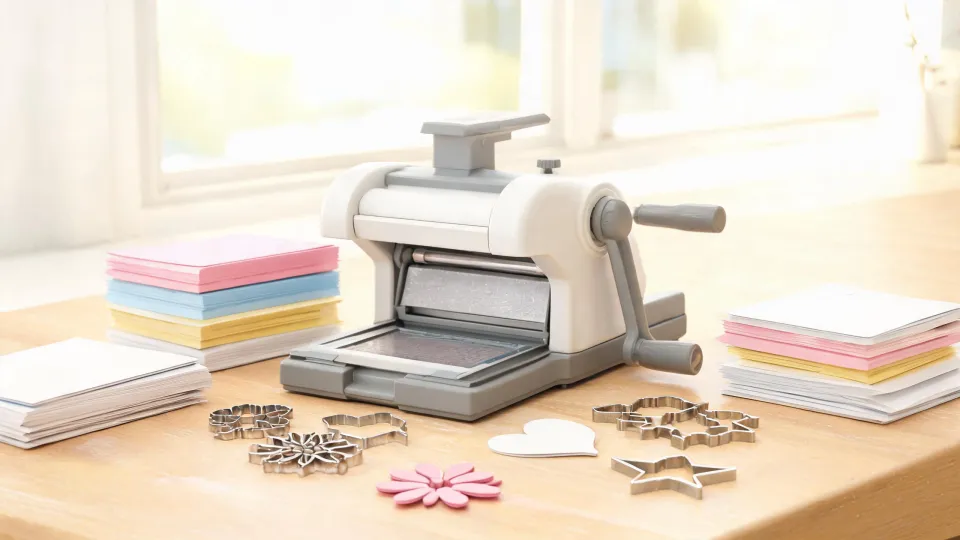
Here's the short answer for B2B buyers: the Sizzix Big Kick die cutting machine is worth a line in your budget if you plan to make custom die-cut corporate gifts in-house and reuse the same dies. Not because it's inexpensive. Because it lowers your total cost per finished unit when you account for the die cost over many pieces. A $180 custom die looks scary until it's spread across 60 ornaments — that's $3.00 per piece before materials and labor. That's the TCO mindset, and it should drive this decision.
I'm a procurement manager at a 38-person promotional products company. I've managed our materials budget — about $180,000 a year, give or take — for six years. I've negotiated with 20-plus vendors, tracked every invoice in our cost system, and built a cost calculator after getting burned on hidden fees twice. When I compared our outsourced felt ornament production against in-house Sizzix production in Q2 2024, the difference was smaller than I expected before I added labor. Labor is the part everybody forgets.
What the Sizzix Big Kick actually is
According to Sizzix's product page (sizzix.com), the Big Kick is a manual die cutting machine that works with Sizzix wafer-thin dies and is suited for cutting paper, cardstock, felt, fabric, leather, and some craft foams. It is not an industrial die press. It's a tabletop tool for small-batch production, prototyping, and seasonal runs. It cannot cut glass, metal, uncoated crystal, or thick wood. That limitation matters when someone asks, 'can you make a crystal gift with this?' The answer: not if the crystal itself needs to be shaped or engraved.
I know that sounds obvious, but we've had well-meaning salespeople tell clients a Big Kick could 'do everything.' It can't. It does a few things well, and those few things can be profitable.
The Sizzix app: not a gimmick, mostly
Before buying, I assumed the Sizzix app would be a marketing toy. It isn't. I use it to browse die shapes, preview layouts, and check whether a shape fits a sheet of material before we cut. That reduces waste, and waste is a cost. In our first quarter using it, we trimmed scrap by maybe 12 percent — though I might be misremembering the exact number. Even if it's 8 percent, it helps.
For a small procurement team, the app is also useful for communicating with the workshop. We share a cut layout with our operator instead of scribbling 'cut around the outline' on a post-it. Fewer miscommunications means fewer redo costs.
The procurement math I use for die cutting
Don't compare quotes. Compare total cost of ownership. This is the formula I put in our cost tracking system:
- Machine cost divided by expected usable life, or charged to the first big project
- Custom die cost divided by the number of units you actually produce with that die
- Material cost per unit, plus test-cut waste
- Labor time — someone has to feed the machine, crank it, and finish the pieces
- Finishing and packaging: glue, tags, care labels, poly bags, inserts
- Hidden costs: failed prototypes, replacement dies, training, and the occasional 'can you redo these by Friday?' rush
The lowest quote is never the whole story. A few years ago, I approved a vendor because they were $0.40 cheaper per unit than the next quote. Then came a $250 setup fee and a $90 reprint because the logo color was wrong. That 'cheap' option cost us $340 more than the competitor. I still use that example when someone asks me why I don't chase the lowest price.
What most people don't realize is that 'standard turnaround' from a die maker often includes buffer time used to manage their production queue. It doesn't mean your custom die will actually take that long. But it also doesn't mean it will arrive sooner. Plan for the quoted lead time in your total project timeline.
Custom dies: when do they actually pay off?
Standard Sizzix dies are affordable and can produce a ton of gift shapes. Custom dies are different. You're paying for tooling and an exclusive shape. In my experience, a custom die pays for itself only when you plan at least 100 units, or when you intend to reuse it across multiple seasons. Otherwise, use standard dies and customize the assembled gift with a printed label, ribbon, or a small embroidered patch. Those are cheaper ways to make a gift feel custom.
There's also a historical belief that custom dies require enormous factory minimums and long waits. That was true decades ago when a manufacturer had to hand-build a metal die. Today, custom Sizzix dies are easier to order, but they still have a setup cost. So the old 'custom is only for big companies' idea is mostly outdated — but don't ignore the setup cost.
Candle holders and crystal gifts: know the boundary
Candle holders are another big corporate gift category. Can the Sizzix Big Kick make a candle holder? It can make the parts around one: a die-cut felt sleeve around a glass votive, a paper wrap, or a custom box insert that holds everything in place. It won't cut the glass or ceramic candle holder itself.
And if your company sells a crystal gift line, keep this in mind: die cutting isn't glass engraving. The Big Kick won't etch a logo into crystal. You'd need a laser engraver or an etching service for that. Saying 'we can die-cut a crystal award' would be a costly mistake. Literally. We made that mistake once in a proposal, caught it before production, but lost a day reworking the quote. Crystal is lovely, but it doesn't belong on a die cutting consumables list.
Can I throw pillow in washing machine? The care question you forgot
Here's where the total cost view gets very practical. One of our best-selling corporate gifts last holiday season was a felt throw pillow with a die-cut logo. It looked premium and shipped flat. Then the care questions started: 'can i throw pillow in washing machine? It got coffee on it.'
The honest answer: if it's a die-cut felt pillow, no. Machine washing can warp the felt, loosen adhesives, and fray the cut edges. Spot cleaning with a damp cloth and mild detergent is safer. We now include a small care tag on every fabric gift. That tag costs about nine cents and saves us from a stream of frustrated customers. Put care instructions into your cost estimate, not into the 'maybe later' pile.
For embroidery kits and fabric projects, the same logic applies. A machine can cut the fabric, but it won't protect you from the after-sale questions. Those questions are part of your real cost.
When I'd tell you to skip the Sizzix Big Kick
Not every B2B buyer should buy one. If your core work is standard printed products — business cards, brochures, flyers — online printers like 48 Hour Print work well for those, especially at quantities from 25 to 25,000. You don't need a die cutting machine on the floor for that.
You also don't need it if you're producing thousands of identical pieces with tight tolerances; an industrial die press or digital cutter is a better fit. And if your customer asks for a material like 1/4-inch acrylic, thick wood, or metal, the Big Kick isn't the right tool.
So, bottom line: the Sizzix Big Kick is a good procurement decision when your projects have enough volume to absorb die costs and enough variety to make in-house cutting worthwhile. Count the machine, dies, labor, waste, and care tags. If you expect it to cut crystal or solve throw pillow laundry problems, skip it. But for felt ornaments, candle-holder sleeves, embroidery kits, and other small-batch corporate gifts, the total cost math can work in your favor. That's what I'd tell any B2B gift buyer.

Elise Laurent is a crystal and decorative glass quality analyst covering crystal figurines, vases, ornaments, suncatchers, and gift glassware. She examines ISO 6486-1 where food-contact glass dinnerware applies, then uses polarized strain inspection, dimensional checks, surface-defect grading, and refractive clarity to compare decorative pieces outside that scope. Her work helps sourcing teams choose materials, finishing routes, and protective packaging without confusing visual brilliance with verified durability.