I've Outsourced Promotional Product Orders for 6 Years. Here's What Nobody Tells You.
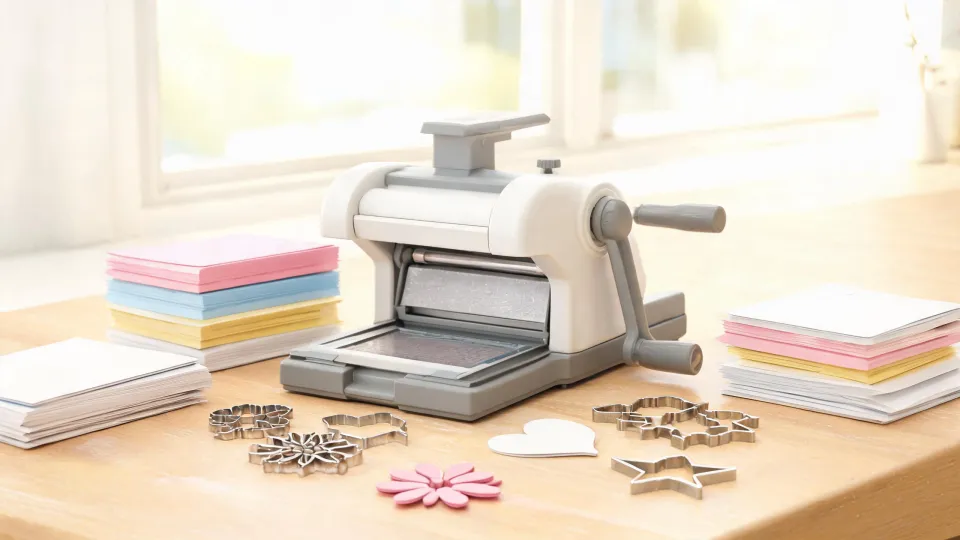
Outsourcing Isn't the Easy Button You Think It Is
Let me start with a confession: I think most advice about outsourcing promotional product orders is dangerously oversimplified. It's not a "set it and forget it" process. It's not just about finding the cheapest supplier. And it's definitely not something you can hand off to a junior team member without a proper system.
In my six years handling B2B promotional product orders—from custom Sizzix die-cutting machines for corporate gifts to bulk Christmas ornaments for holiday campaigns—I've personally made (and documented) 14 significant mistakes. Those mistakes totaled roughly $8,200 in wasted budget, delayed shipments, and damaged client relationships. But here's the thing: after the third major error, I stopped blaming the vendors. I started looking at my own process.
What I found changed everything. And honestly, I'm still embarrassed about how long it took me to see it.
The Myth of "Just Send the Artwork"
In my first year (2018), I made the classic rookie mistake: I assumed that if I sent a vendor a PDF, they'd read my mind. I ordered 500 custom Sizzix red die-cutting machines for a corporate quarterly incentive program. The artwork looked perfect on my screen. The specs were clear—I thought. The result? The machines arrived with the company logo in the wrong PMS color. Not close. Wrong. $1,200 worth of redos, and a 3-day production delay that nearly blew the client's event timeline.
Here's the uncomfortable truth that most outsourcing guides won't tell you: Vendors aren't mind readers. They process what you give them, not what you meant to give them. And in the promotional products industry, where margins are thin and timelines are tight, that gap between intent and execution is where errors live.
"5 minutes of verification beats 5 days of correction." — My own rule, written after that $1,200 mistake.
The way I see it, outsourcing isn't a handoff. It's a partnership. And like any partnership, it requires communication, trust, and—most importantly—a system.
Why a 12-Point Checklist Saved Us $8,000 (And Counting)
After the color-matching disaster, I created what I call our "pre-order checklist." It started as 5 points scrawled on a sticky note. Today, it's 12 points, typed up and laminated, stuck to the desk of every team member who touches an order. In the past 18 months, that checklist has caught 47 potential errors—everything from wrong die specifications for Sizzix machines to incorrect ornament dimensions for our Christmas line.
Here's what our checklist covers, and why each point matters:
1. Artwork Verification
We don't trust our own files. We don't trust the vendor's preview. We verify color codes (PMS, CMYK), resolution (300 DPI minimum), and dimensions against a physical sample. This step alone has caught 12 errors since we started.
2. Material Specification
This is especially critical for die-cutting. A Sizzix Big Shot Pro can handle different materials than the Sidekick. If you're outsourcing custom dies, the material thickness and type must be explicitly stated. We learned this the hard way when a candle holder order came back with dies that couldn't cut through the specified acrylic.
3. Quantity Confirmation
It sounds basic, but on a 1,000-piece order of corporate gift embroidery kits, a 10% overage or shortage can break your budget. We now triple-check quantities against the purchase order, the vendor confirmation, and our internal tracking system.
4. Timeline Alignment
We ask for a production schedule, not just a delivery date. If a vendor says "3 weeks," we want to know: week 1 is die production, week 2 is sampling, week 3 is final run. This gives us checkpoints without micromanaging.
5. Shipping Method & Tracking
Per USPS pricing effective January 2025, a First-Class large envelope (1 oz) costs $1.50. For a bulk order of 500 greeting cards, that adds up fast. We specify shipping method in writing before the order is placed.
The Surprising Role of Soft Skills
Why do some outsourcing relationships thrive while others fail? I'd argue it's less about price and more about communication. The best vendors I work with—the ones who produce flawless custom Sizzix dies and perfectly sized Christmas ornaments—are the ones who ask questions.
What kind of questions? Things like:
- "What's the end use of this product?" (Helps them recommend materials)
- "Who is the end user?" (Makes them think about durability, aesthetics, safety)
- "Can you send a photo of a similar product you liked?" (Visual reference beats written specs every time)
I've never fully understood why some vendors ask these questions while others don't. My best guess is that it comes down to experience—vendors who've been burned before learn to probe. I now view a vendor who asks detailed questions as a sign of competence, not inconvenience.
The Counterargument You're Probably Thinking
I know what some people will say: "This sounds like a lot of work. Isn't outsourcing supposed to save time?"
Fair question. Here's my answer: It does save time—in the long run. The 20 minutes I spend on pre-order verification saves me the 5 days of crisis management when something goes wrong. The checklist isn't bureaucracy; it's insurance. And like any insurance, you only realize its value when you need it.
Another common objection: "We can't afford to spend that much time on vetting." From my perspective, the real question is: can you afford not to? A single $3,200 order that requires redo—like the custom Sizzix die machines we had to remake—eats up any time savings you thought you had.
Here's What I've Learned
After six years, $8,200 in mistakes, and countless lessons learned the hard way, my view on outsourcing has crystallized into one core belief: Outsourcing doesn't eliminate work. It shifts the work from execution to verification.
The successful outsourcing relationships I've built share one thing in common: they started with clear expectations, documented processes, and a mutual understanding that errors happen—but they don't have to be catastrophes. Whether you're ordering a single Sizzix red die-cutting machine for a trade show giveaway or 10,000 custom Christmas ornaments for a holiday campaign, the principle holds: check twice, order once.
And if you're just starting out? Save yourself the $8,200 I spent. Create your checklist today. Believe me, your future self will thank you. Period.

Elise Laurent is a crystal and decorative glass quality analyst covering crystal figurines, vases, ornaments, suncatchers, and gift glassware. She examines ISO 6486-1 where food-contact glass dinnerware applies, then uses polarized strain inspection, dimensional checks, surface-defect grading, and refractive clarity to compare decorative pieces outside that scope. Her work helps sourcing teams choose materials, finishing routes, and protective packaging without confusing visual brilliance with verified durability.