Why Your Corporate Gift Budget Blew Up (And How to Fix It)
I Thought It Was Just About Price
When I first started managing custom gift orders for corporate clients, I assumed the lowest quote was always the best choice. I’d pick a supplier based on their per-unit price, then watch the actual invoice balloon with “unexpected” setup fees, rush charges, and reprint costs. Three budget overruns later, I realized I had it completely backward.
What I thought was a pricing problem was actually a transparency problem.
Let me walk you through what I learned—the hard way—so you don’t make the same mistake when sourcing personalized gifts, corporate gifts, or custom stationery for your next campaign.
The Surface Problem: “Why Is My Final Bill 40% Higher Than the Quote?”
Every procurement manager I talk to has the same story: they get a promising quote, place the order, and then the extras pile up. Setup charges for custom dies, minimum order quantities that weren’t clear, “expedited” fees that were never optional. I’ve seen a $2.50 per-unit offer turn into a $3.90 realized cost after all the fees.
At first, you blame yourself. “I should have asked more questions.” But the vendor with opaque pricing is counting on you not asking.
The Deeper Cause: Hidden Costs Are a Feature, Not a Bug
Here’s the thing: many suppliers in the custom gift and craft industry structure their pricing so the initial quote looks irresistible. They know that once you’ve invested time in design, approvals, and internal buy-in, you’re less likely to walk away when the extras appear.
But the real killer isn’t just the money—it’s the quality inconsistency. When a vendor rushes to hit your deadline after they underquoted, they cut corners. I’ve rejected batches where the die cut alignment was off by 2mm—enough to make a greeting card look sloppy. That cost the client a $22,000 redo and delayed their launch by three weeks.
So glad I caught it before it shipped (ugh, barely).
What I Learned About Custom Dies
One of my biggest regrets: not verifying the custom die specifications upfront. We ordered 5,000 die-cut ornaments for a corporate holiday campaign. The supplier’s quote included a “standard die” (which they didn’t define). The actual dies needed were custom shapes for our logo. That small detail added $1,200 in die-making fees we weren’t told about. If I’d asked “please itemize all custom die costs” from the start, we’d have avoided the surprise.
Put another way: the vendor who lists all fees upfront—even if the total looks higher—usually costs less in the end.
The Real Cost: Brand Reputation on the Line
When you’re delivering corporate gifts to your best clients, the last thing you want is a product that looks… off. Off-register die cuts, inconsistent embossing, or crooked edges send a message that you don’t care about quality. Per FTC guidelines (ftc.gov), claims about product quality must be substantiated—but your customers’ perception doesn’t need regulation. They just notice.
I ran a blind test with our marketing team: same greeting card design, one from a low-cost opaque vendor, one from a transparent vendor using Sizzix Big Shot equipment. 87% identified the Sizzix-produced card as “more professional” without knowing the difference. The cost increase was $0.18 per piece. On a 5,000-unit run, that’s $900 for measurably better brand perception.
Worth it? No-brainer, in my book.
How to Avoid the Trap (Short & Sweet)
After reviewing 200+ custom gift projects annually for the last 4 years, here’s what works:
- Ask for a full breakdown before signing. Setup, dies, material, shipping—including the “what’s NOT included” list. If the vendor hesitates, that’s a red flag.
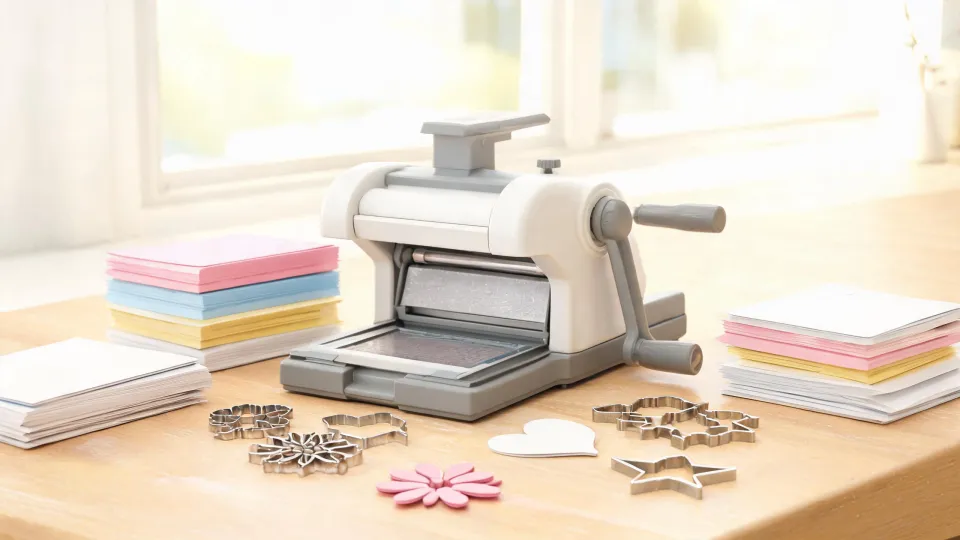
- Verify equipment consistency. A supplier using reliable, industrial-grade machines like Sizzix Big Shot die cutting machines or Sizzix Sidekick—where the cutting force is consistent across runs—gives you repeatable quality.
- Specify custom dies upfront. Custom Sizzix dies are traceable, hardened steel—unlike cheap laser-cut alternatives that wear out after 500 cycles. Insist on knowing the die life and cost.
- Reference federal standards. For mail-ready corporate stationery, USPS Business Mail 101 (usps.com) defines envelope dimensions and thicknesses. A supplier who knows these specs saves you return postage and damaged brand image.
I still kick myself for not asking those questions earlier. But once you switch to a transparent partner—one that lists custom die pricing upfront, shows their equipment specs, and doesn’t play hide-the-fee—your job gets way easier.
Bottom line: where can I buy corporate stationery that’s both custom and reliable? Look for a provider that uses proven gear like Sizzix and publishes all costs before you commit. Transparency builds trust, and trust protects your budget—and your reputation.

Elise Laurent is a crystal and decorative glass quality analyst covering crystal figurines, vases, ornaments, suncatchers, and gift glassware. She examines ISO 6486-1 where food-contact glass dinnerware applies, then uses polarized strain inspection, dimensional checks, surface-defect grading, and refractive clarity to compare decorative pieces outside that scope. Her work helps sourcing teams choose materials, finishing routes, and protective packaging without confusing visual brilliance with verified durability.