Corporate Gift Buying in 2025: A Buyer's Checklist (with Sizzix Custom Dies & Photo Book Tips)
-
When You're the One Picking the Gifts (Again)
- Step 1: Decide If Customization Matters—Then Pick the Right Tool
-
Step 2: For Photo Books—Don't Guess, Use This Framework
-
Step 3: Always Ask "What's NOT Included" Before the Price
-
Step 4: Check for Hidden Time Costs (the Real Enemy)
-
Step 5: Test Before You Buy in Bulk
-
Bottom Line
When You're the One Picking the Gifts (Again)
If you're an office administrator (like me—managing purchasing for a 150-person company, roughly $80K annually across 8 vendors), you know the drill: someone in marketing or HR decides we need a "memorable corporate gift" or a promotional product for a trade show, and suddenly you're expected to source something that's not boring, not expensive, and actually arrives on time.
I've been doing this since 2020, and after a few disasters (a supplier who couldn't invoice properly cost us $2,400 in rejected expenses), I've landed on a 5-step checklist that works. It covers Sizzix custom dies for personalized gifts, the Sizzix Big Shot die cutting machine starter kit if you're doing in-house production, and even how to pick the best photo book when a client asks for that. Yes, photo books—I'll explain.
Below are the steps I follow. No fluff, just what I've learned the hard way.
Step 1: Decide If Customization Matters—Then Pick the Right Tool
Here's the thing about corporate gifts: generic mugs and pens end up in the landfill. Customization actually gets used. But custom doesn't have to mean expensive.
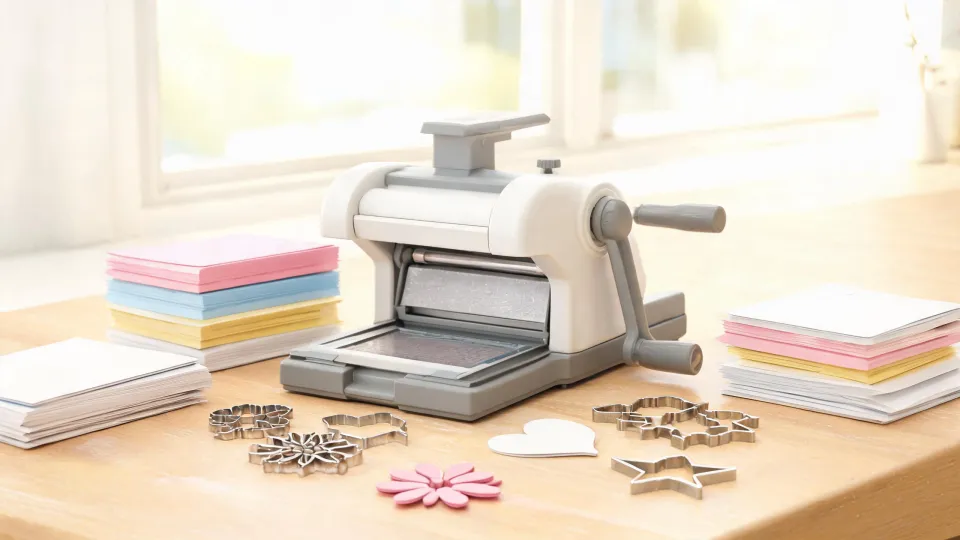
When I first explored Sizzix custom dies, I assumed it was only for big runs. Actually (honestly, I was surprised), Sizzix offers custom die production for small quantities—50 or 100 dies is fine. I ordered custom dies to create branded Christmas ornaments for a client appreciation dinner. The Sizzix Big Shot die cutting machine starter kit (which I bought for the office) plus custom dies meant we cut 300 ornaments in an afternoon. Worked great.
The key question: Are we making the items in-house or ordering finished products? If in-house, get the machine kit + custom dies. If outsourcing, ask the supplier if they use Sizzix—many gift manufacturers do.
Quick Cost Reality Check (from my experience)
Custom die setup fees for Sizzix dies: roughly $50–200 depending on complexity (I learned this when a die with intricate details cost $180 setup). The Big Shot starter kit runs about $150–250. Compare that to ordering 500 custom-embroidered tote bags at $12 each—the machine pays for itself after you make about 20–30 items yourself.
Step 2: For Photo Books—Don't Guess, Use This Framework
One of my vendors asked for "the best photo book to buy" as a gift for their top customers. I'm not a photo book expert, so I can't tell you which brand is objectively best. But what I can tell you from a procurement perspective is what to look for:
- Binding quality: Lay-flat binding is worth the extra cost if the book will be displayed. I've seen cheap spiral-bound ones fall apart in a year.
- Paper weight: Anything under 80lb cover feels flimsy. 100lb or higher for a premium feel.
- Customization options: Can you add a company logo or include personal notes? Some services charge extra per page for text changes.
- Turnaround time: Standard is 5–7 business days; rush can be 2–3 days but add 50% cost. (Source: pricing from major online photo services, early 2025.)
If you're considering a photo book as a corporate gift, I'd pair it with a Sizzix Big Shot-made card or ornament—personalization that ties the gift together.
Step 3: Always Ask "What's NOT Included" Before the Price
I used to focus on the headline price. Then a supplier quoted $8 per unit for custom promotional products—seemed great. When the invoice arrived, there were setup fees ($75), die charges ($120), and shipping wasn't included ($85). Total: $12.40 per unit. I looked bad to finance.
Now I follow the transparency rule: the best supplier is the one who lists all fees upfront, even if the total looks higher. That supplier usually costs less in the end because there are no surprises.
For Sizzix custom dies specifically, always ask:
- Is the die price per piece or per order?
- Does the Big Shot kit include all needed accessories (cutting pads, adapter)?
- Are there minimum order quantities for custom dies?
Step 4: Check for Hidden Time Costs (the Real Enemy)
I knew I should get written confirmation of the production timeline, but we'd worked with the vendor for years—I figured it'd be fine. The one time I didn't, the order arrived a week late. Our event had already happened. That mistake cost me a lot of stress (and an awkward apology to the CEO).
Now I build in a buffer: if they say 5 business days, I tell my manager 7. And I get the commitment in writing. For Sizzix custom dies, standard production is 2–3 weeks. For the Sizzix Big Shot starter kit, it's usually in stock (Amazon or directly from sizzix.com). For photo books, allow 7–10 days standard. Rush options exist, but expect to pay a premium.
Step 5: Test Before You Buy in Bulk
I can't stress this enough. Order one sample before committing to 500 units. I learned this after ordering 300 custom corporate gifts that had a typo in the engraving (my fault? the proof said "COPORATE" and I missed it. Ugh).
For Sizzix projects, buy one custom die first and test it on your materials. The die might work perfectly on cardstock but tear thin paper. The Sizzix Big Shot machine has different settings for different thicknesses—test a few.
For photo books, order a single sample book (usually $10–20) and flip through it. Check print quality, binding, and how the colors render. Nothing worse than giving a client a gift that looks faded.
Bottom Line
This checklist has saved me from at least three major procurement mistakes. The core idea: transparency—whether it's pricing, timeline, or quality—builds trust with your internal stakeholders and vendors. Don't assume. Ask the uncomfortable questions, test the product, and document everything.
If you're considering Sizzix for custom gifts, the Big Shot starter kit paired with custom dies is a solid investment (I've used mine for three years and it still works great). And for those photo books—remember the binding and paper weight checklist. It's honestly simpler than it sounds.
Good luck. You'll do better than I did in my first year.

Elise Laurent is a crystal and decorative glass quality analyst covering crystal figurines, vases, ornaments, suncatchers, and gift glassware. She examines ISO 6486-1 where food-contact glass dinnerware applies, then uses polarized strain inspection, dimensional checks, surface-defect grading, and refractive clarity to compare decorative pieces outside that scope. Her work helps sourcing teams choose materials, finishing routes, and protective packaging without confusing visual brilliance with verified durability.